OmniCore Lab 中文

Product · In development

PalmCore

An AI companion that lives in the phone, made for people who aren’t at home with smartphones.

What exists today

It runs on a phone today

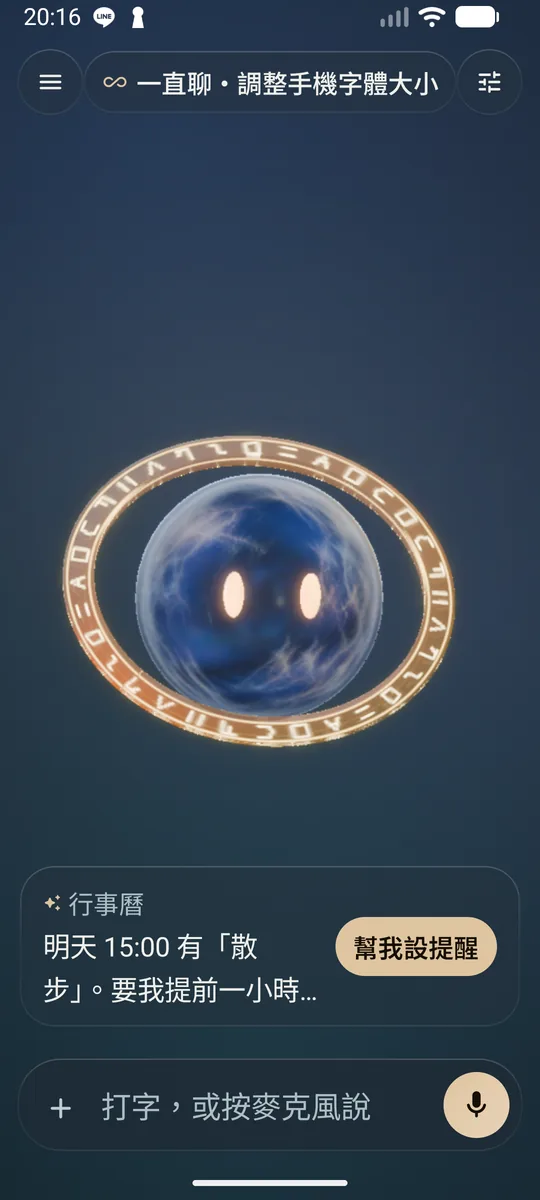
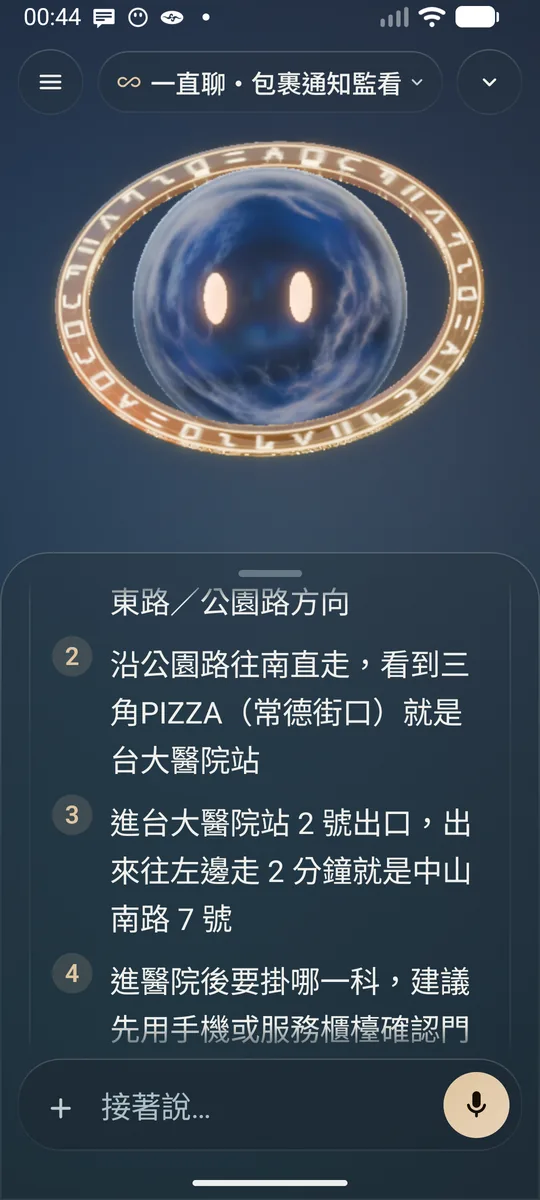
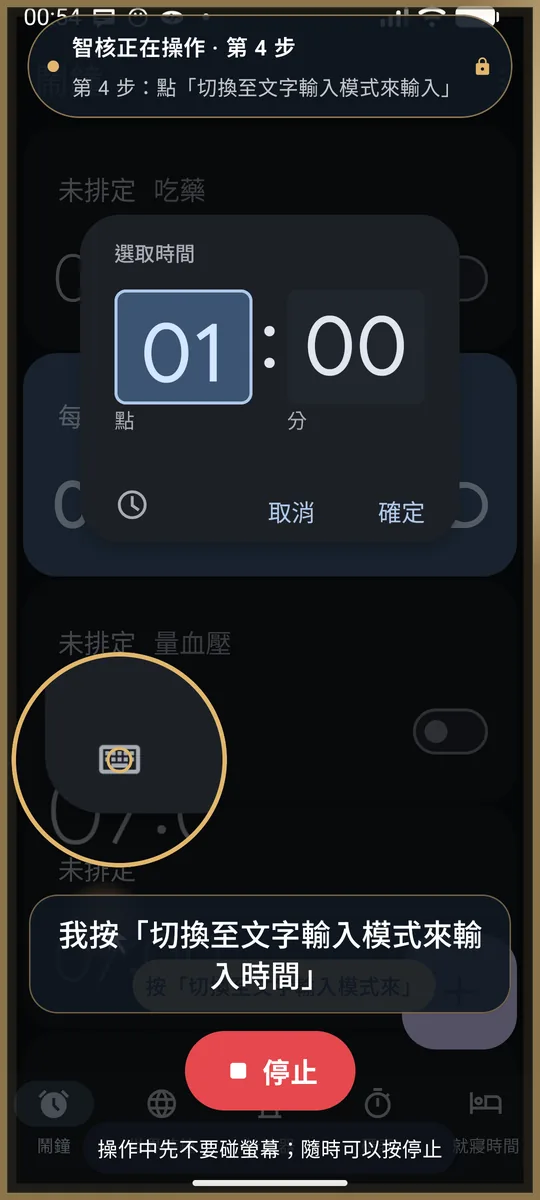
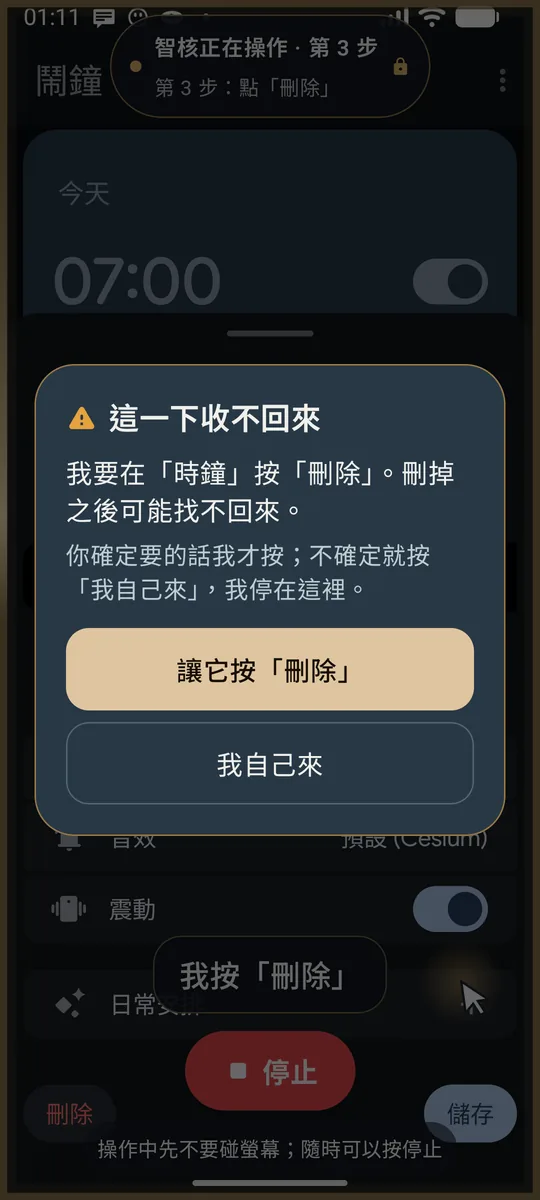
These are screens from the current build, running on an Android phone. Nothing here is a mock-up.

PalmCore home screen with the character in the centre and a reminder suggestion below
Home. The character is the home screen. You talk to it or type.
A conversation showing walking directions broken into numbered steps
Directions come as numbered steps, one thing at a time.
PalmCore operating the clock app, with a caption for the current step, a magnifier on the button being pressed, and a stop button
When it does something for you, it says each step and shows where it is pressing. The stop button never leaves the screen.
A confirmation card asking before deleting an alarm, with the options let it press delete or I'll do it myself
Before anything that can't be undone, it stops and asks. “I'll do it myself” is always an answer.

What is built

  • A companion you talk to or type to, with voice in and out
  • Step-by-step guidance on top of whatever app you are in
  • Doing a task for you on the phone, one visible step at a time, with a confirmation before anything irreversible
  • A separate app for family: pairing by QR code, end-to-end encrypted messages, and screen sharing that starts only when the person agrees
  • Memory of what you have told it, kept on the phone
  • Masking of personal information on the phone before text goes to a cloud model

Measured so far

One thing we have measured properly

Before text leaves the phone for a cloud model, a small model on the phone finds personal information and masks it. We test it on material it never saw during training.

99.3%
of personal details caught152 of 153 items across 110 screens captured from real phones
0.06
false masks per clean screenon screens that contain no personal information at all
98.5%
caught in conversation480 test sentences, nine kinds of personal information

Measured on 10 October 2026 with the same quantized model and rules that ship in the app. These are our own test sets and nobody outside the team has checked them. A fresh on-device run with this model is still to do.

How the phone-number rules work is public: tw-phone on GitHub

Who it’s for

The people nobody had in mind when the phone was designed

A modern phone assumes you already know a great deal: that three stacked lines can be tapped, that pulling the screen down refreshes it, which pop-up needs an answer and which one to ignore. Nobody teaches these things. You pick them up over years of use.

If you didn’t grow up with one, any step can be the one that stops you, and often there is no one around when it does. Many older adults are in exactly this position. Booking a clinic visit, paying a bill, keeping in touch with family: one by one these moved into the phone, and nobody asked them first.

We don’t think of them as people who need looking after. They have handled far more complicated things than a phone. What they want is to get their own things done without having to ask someone each time. That is what PalmCore is for.

Three commitments

PalmCore rests on three things

01It sits beside you

However clear the instructions are, once you’ve read them you are back in front of the screen by yourself. PalmCore stays. When you set out to do something, it goes through it with you one step at a time, at your pace.

The picture we keep in mind is a patient person in the next chair. They don’t hurry you, and their tone doesn’t change the second time you ask.

02It never leaves you stranded

When you get stuck, most software shows you the same hint again. PalmCore treats that moment as its cue: someone steps in, and family can help from a distance when they can’t be in the room.

The standard we hold ourselves to is that at no step should a person be left staring at the screen with no idea what to do.

03It remembers you

The tiring part of asking for help is often having to explain everything from the beginning. PalmCore remembers what you’ve told it, so next time you don’t have to.

Remembering someone is a responsibility. That is why this commitment can’t be discussed apart from our position on privacy, below.

Privacy

Personal data stays on the phone first

A companion that helps you use your phone will come across very private things. Our position: personal data is handled on the phone first, and leaves it only when it has to.

This is where the design starts. It is not a setting added at the end. It makes a number of features harder to build, and we think that cost belongs to us, not to the people using the product.

When PalmCore is released it will come with its own privacy policy, spelling out what is collected, where it is kept and for how long.

Privacy policy for this website

Design position

A few things we decided not to do

  • No “senior mode”Enlarging the text and removing features tells a person “this is all you get.” We want to help people use the things they wanted to use in the first place.
  • No scoresNobody is here to sit an exam. Learning quickly or slowly should never turn into a number on the screen.
  • No hurryingBeing willing to wait is the most basic thing this product has to be able to do.

Where it stands

In development

Still being built, not yet released

There is no version of PalmCore to download and no waitlist. At this stage we aren’t showing the product or discussing how it is built. When we can explain it responsibly, this page will be updated.

To learn more or talk about working together, write to us.